Clearing out stormwater catch basin pits
Storm drain catch basins accumulate leaves, sediment, trash and other debris, and when full, block water flow and cause flooding of roadways and properties. After heavy rains, or in areas with extensive tree cover or consistent erosion, tons of debris can rapidly wash in and accumulate. Failure to regularly clean out drains can lead to expensive damage to infrastructure and buildings, as well as stormwater regulation violations.
Due to the combination of basin depth and confined entry, manual cleanouts are rarely an option. While storm drain inserts can capture organics, trash, and coarse sediment for external removal, they are usually only suitable for use in small sites with impervious ground surfaces and little vegetation. For larger or less urban catch basins, a remote mechanical solution is almost always required.
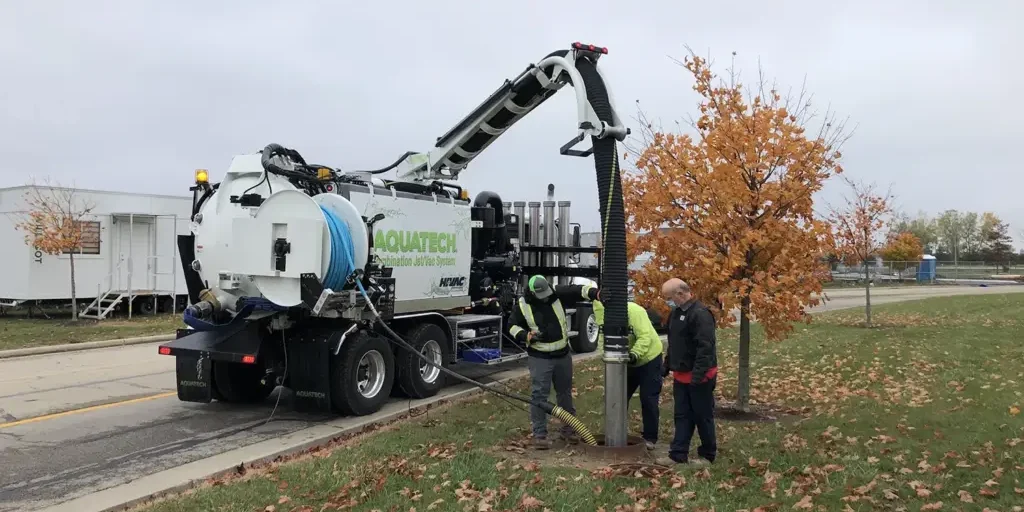
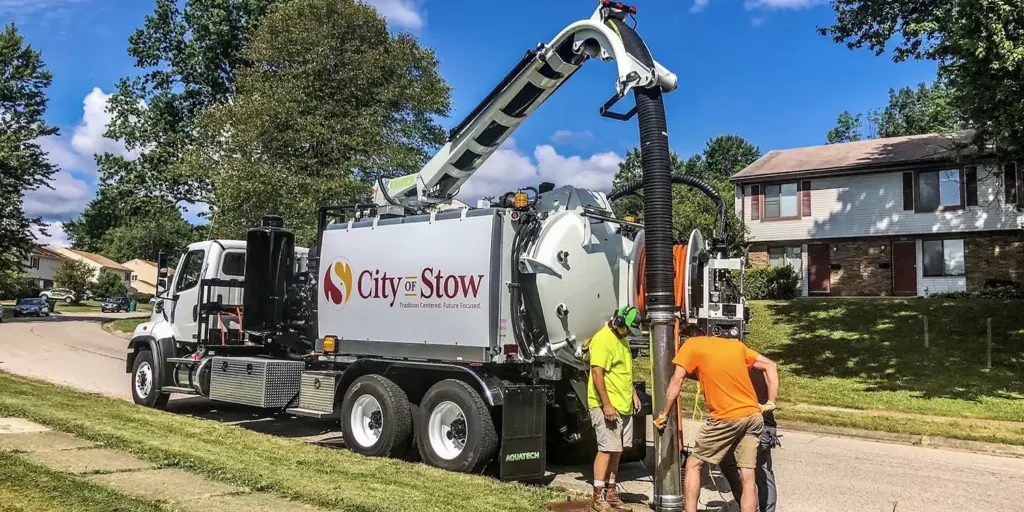
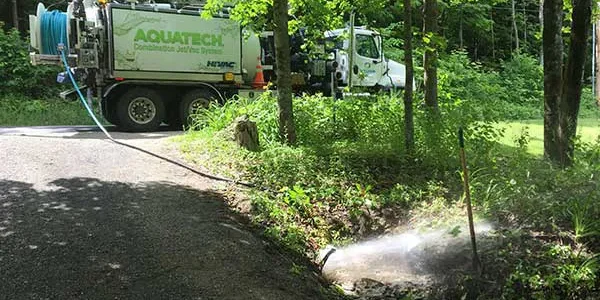
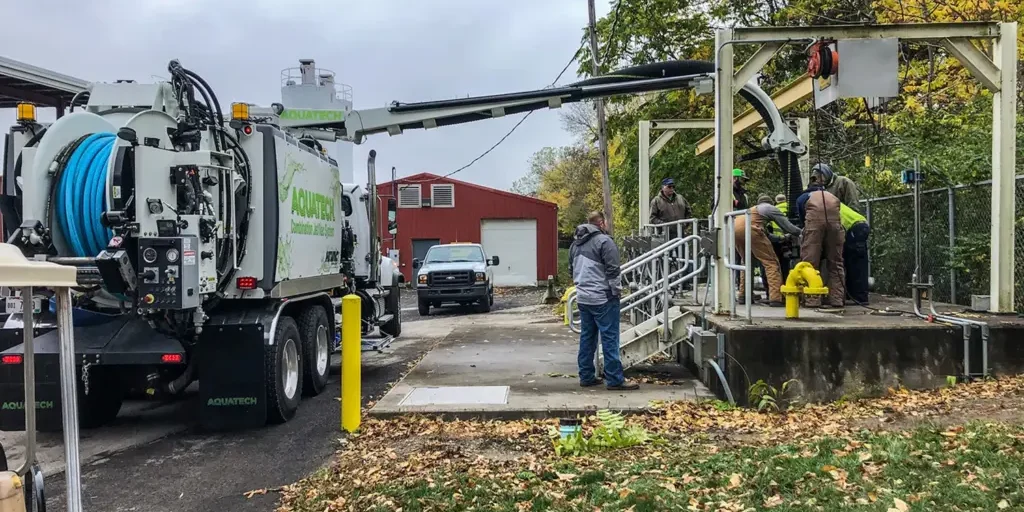
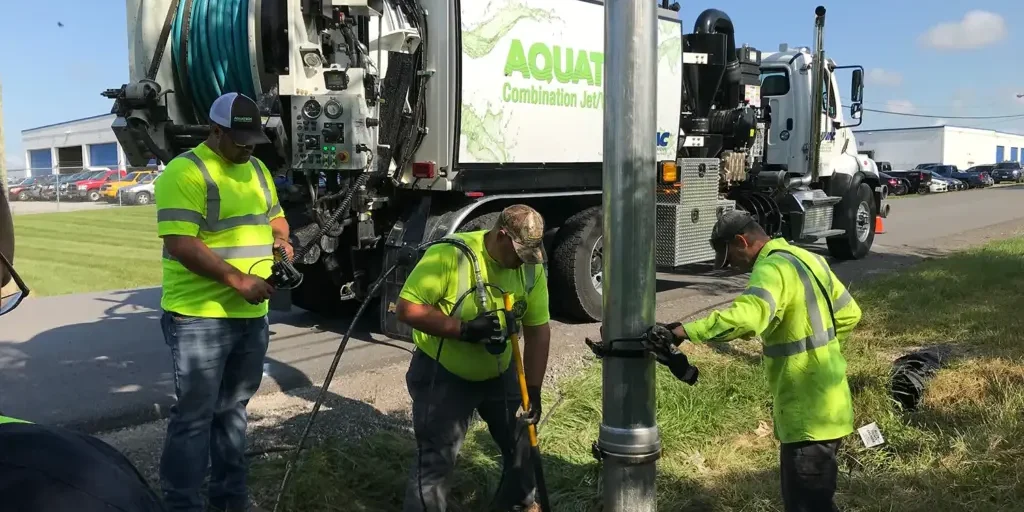
Combination (jet/vac) sewer jetters are generally recognized as the best tool for cleaning out catch basins, combining the jetting force to break up dense sediment with the vacuum power to lift large debris volumes.
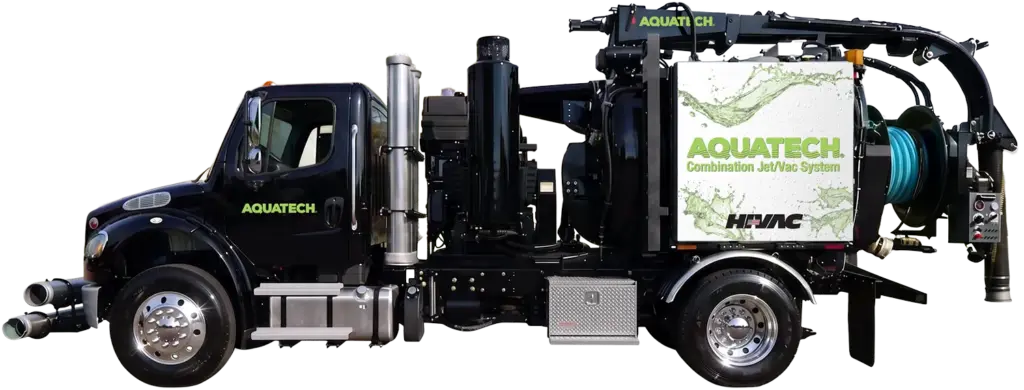
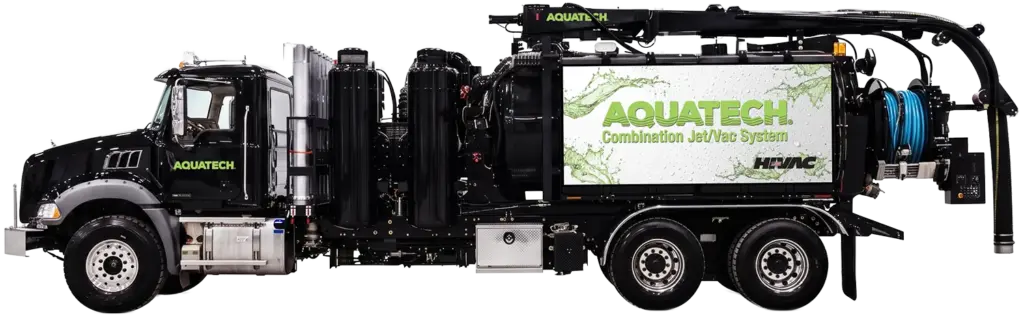
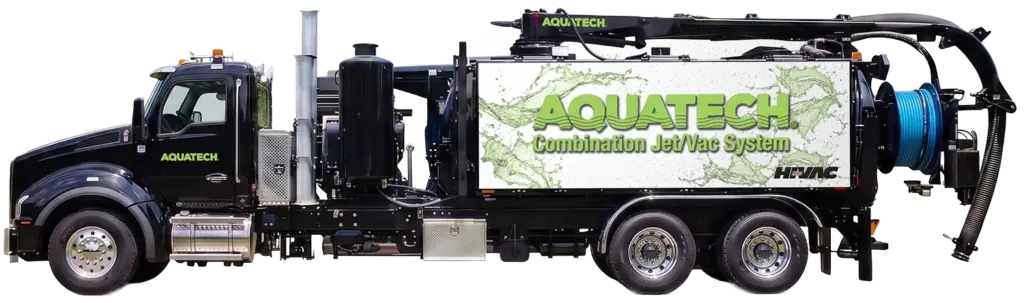
Aquatech’s B-Series combo units provide ample power and capacity to remove and dispose of catch basin sediment and debris. With a range of unit capacities, from 6 yards of debris on a single rear axle chassis, to 15 yards capacity on a longer tandem-axle frame, Aquatech provides options for municipalities and contractors looking for compact unit footprint and those
seeking maximum cleanout volumes.
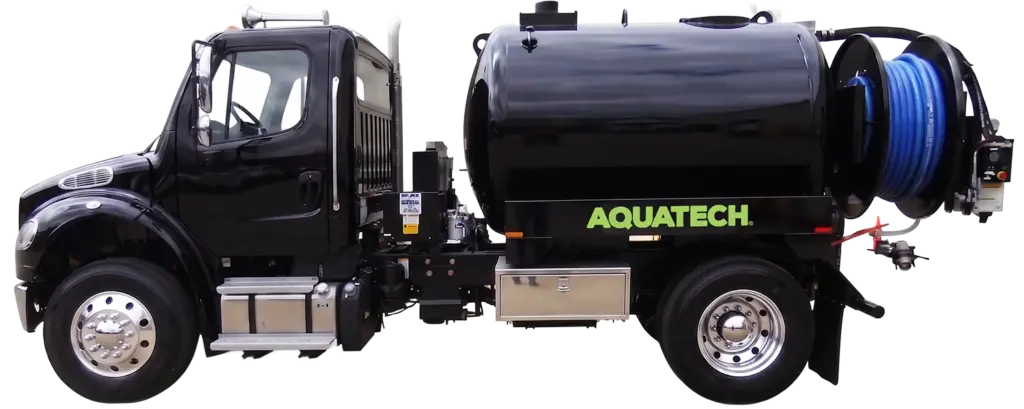
For smaller catch basin jobs, such as flushing inlet and outlet pipes, or working in hard-surface urban areas with limited tree cover, Aquatech’s sister company O’Brien also offers straight jetter trailers and trucks.
Jetting equipment must always be operated by a properly trained and competent worker, following all safe work practices and documented procedures for this type of equipment.