Powerful Jetting for the Biggest Lines
Overview
Tough obstructions & clogs in main lines need serious power to overcome.
The Challenge
Main sewers, which can range up to 72 inches in diameter for trunk lines, are both wide and long, running for miles under the ground. They can accumulate tons of sludge, sediment, scale, and general debris, as well as invasive roots, that must be regularly broken up and removed to prevent reduced flow and resulting system backups. Problem areas, where changes in pipe size or direction produce inherent flow rate reductions, may even require attention every few months. Mechanical rodding or bucket machines may be able to break up clogs or remove debris but have limited range and effectiveness.
While the largest mains may be wide enough to allow workers to enter, inherent confined-space hazards typically make manual cleaning and inspection a measure of last-resort.
The smaller jetter machines used for residential, commercial, and industrial lateral lines may have the power to tackle routine cleaning of smaller mains, major clogs and large sediment volumes can limit their usability. Jetters typically lack the flow rate to tackle very large pipes, and material washed through the pipe may not stay in suspension, moving the problem downstream versus removing it from the system.
Big main sewer jobs that require substantial time on site can create another challenge; unit noise and its cumulative effect on operator health and performance. The US Occupational Health and Safety Administration (OSHA) defines sound levels above 85 decibels over an 8-hour time-weighted average to be hazardous to worker hearing. The National Institute for Occupational Safety and Health (NIOSH) estimates that approximately 13% of all construction & maintenance workers have hearing difficulty as a result of environmental exposure, and 52% of those noise-exposed workers report not wearing hearing protection.
The Solution
Effective sewer main cleaning and clog removal relies on four factors, the water power to jet through deposits and clogs in large pipes that tend to disperse this effect, water capacity to keep going for long periods of time, vacuum power to pull material from large areas, and the waste capacity to collect and carry yards of material for disposal. Every job may not require this capacity, but when they do, having the capacity to reliably get the job done saves time and money, and prevents potentially costly deferred maintenance.
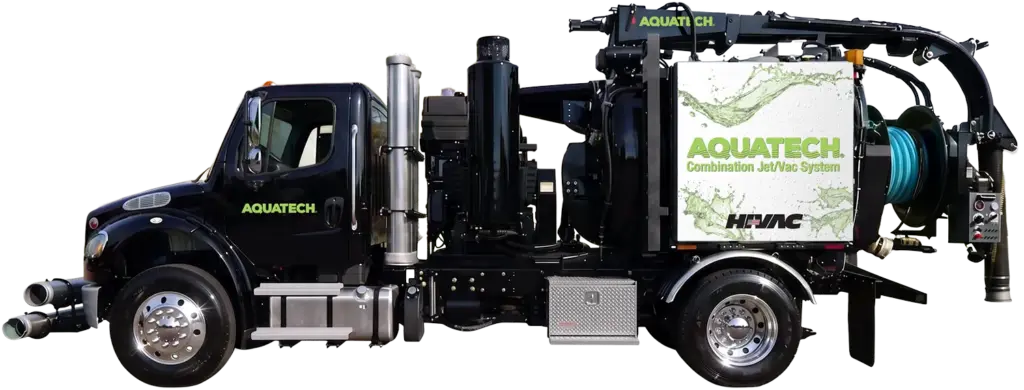
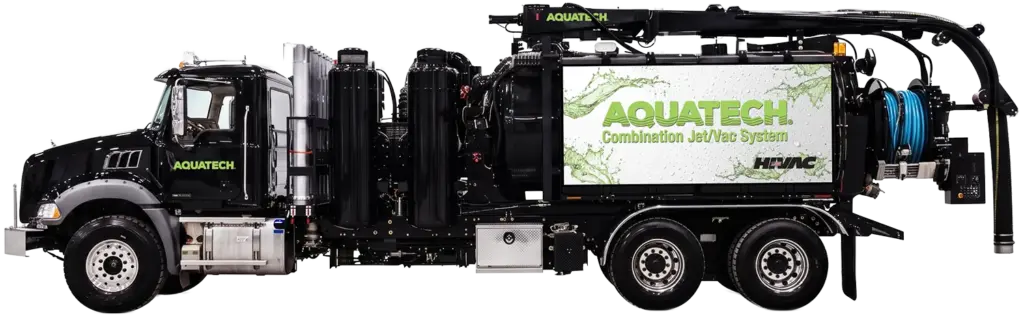
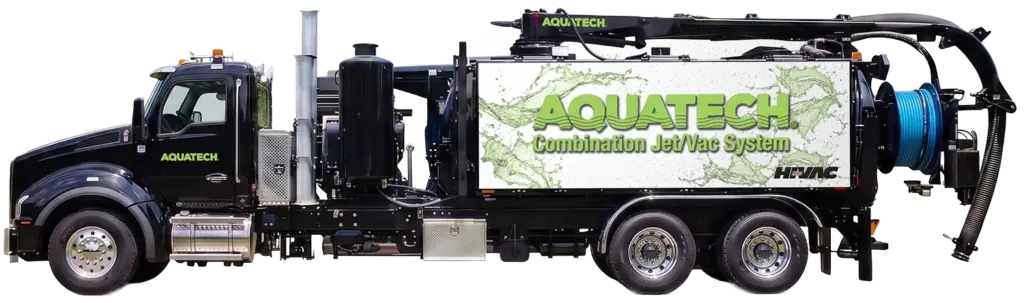
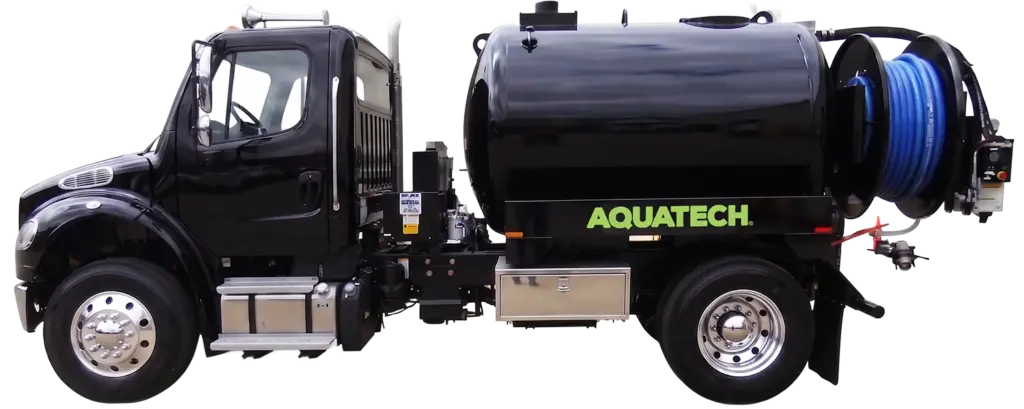
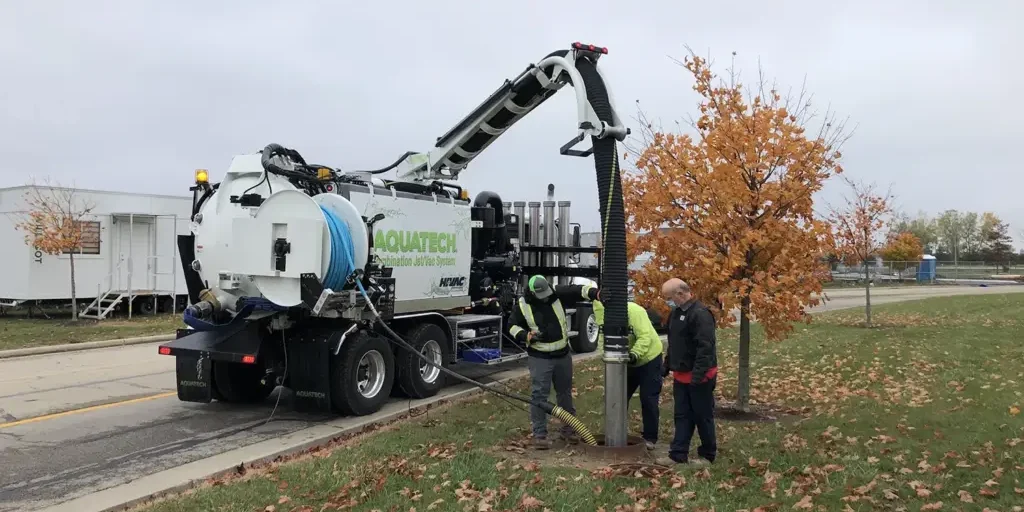
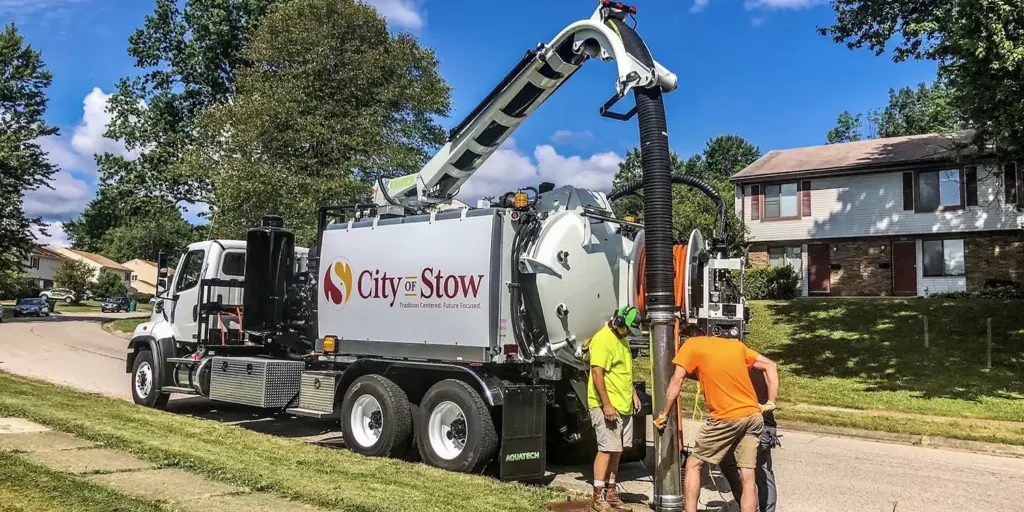
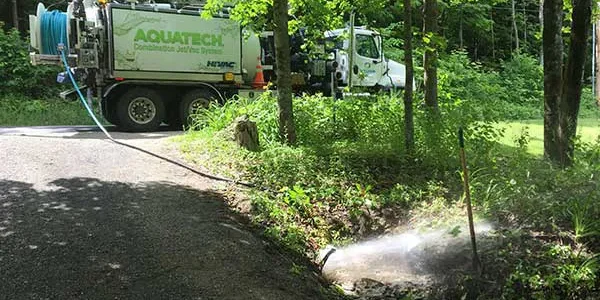
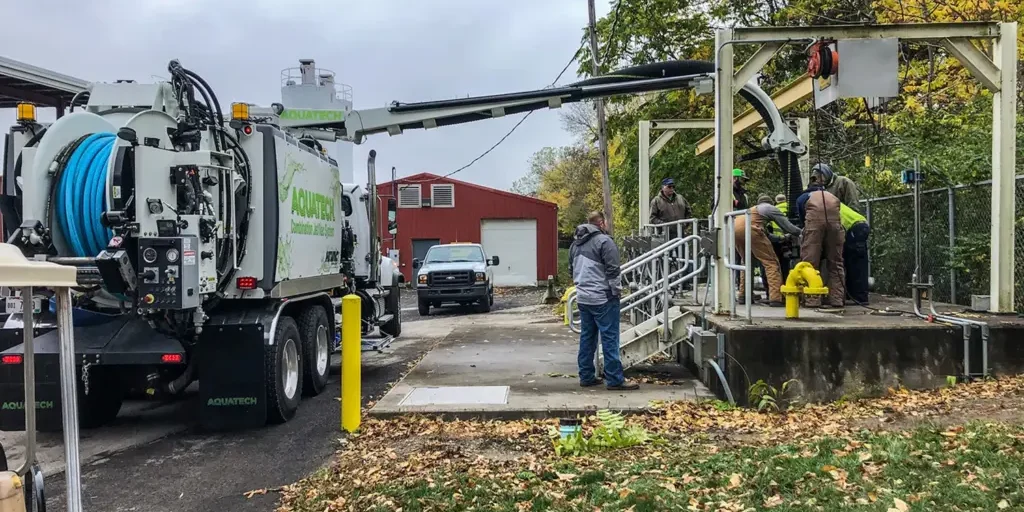
Aquatech’s B-Series combo sewer jetters (jet/vac) combine all the factors needed to tackle the biggest jobs. High water and waste capacity. Powerful triplex water pumps and positive displacement vacuum pumps. All combined in easy to use, easy to service, and ruggedly durable line of units.
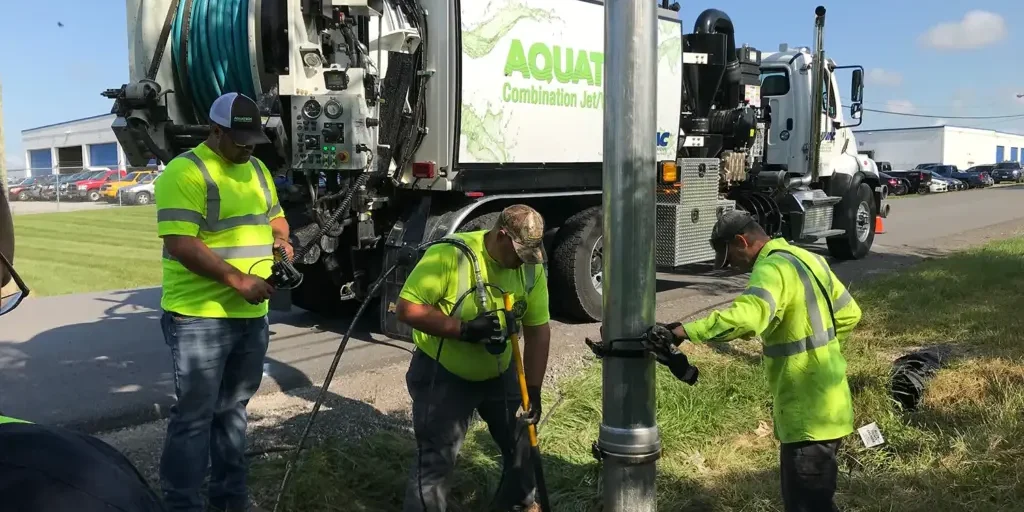
Aquatech also brings a unique feature to the market; a rear-reel design that moves the operator away from the engine and other internal sound sources. Instead of operating for hours within feet of a roaring diesel engine, users stand at the back of the truck, where noise levels are up to 25 decibels lower (at or under the 82 Db long-term exposure threshold). Eliminate hearing loss and the the user fatigue that comes from working in a high-noise environment.
The Results
- Fast clog clearance: the power to quickly break through, cut, and push tough grease, roots, and debris, even in the biggest pipes
- Big volume removal: fresh water capacity for extended run time in the biggest or most obstructed main line pipes
- Safe operation: high-pressure water will not damage even older clay pipes (which could make a bad situation even worse)
Note
Jetting equipment must always be operated by a properly trained and competent worker, following all safe work practices and documented procedures for this type of equipment.